
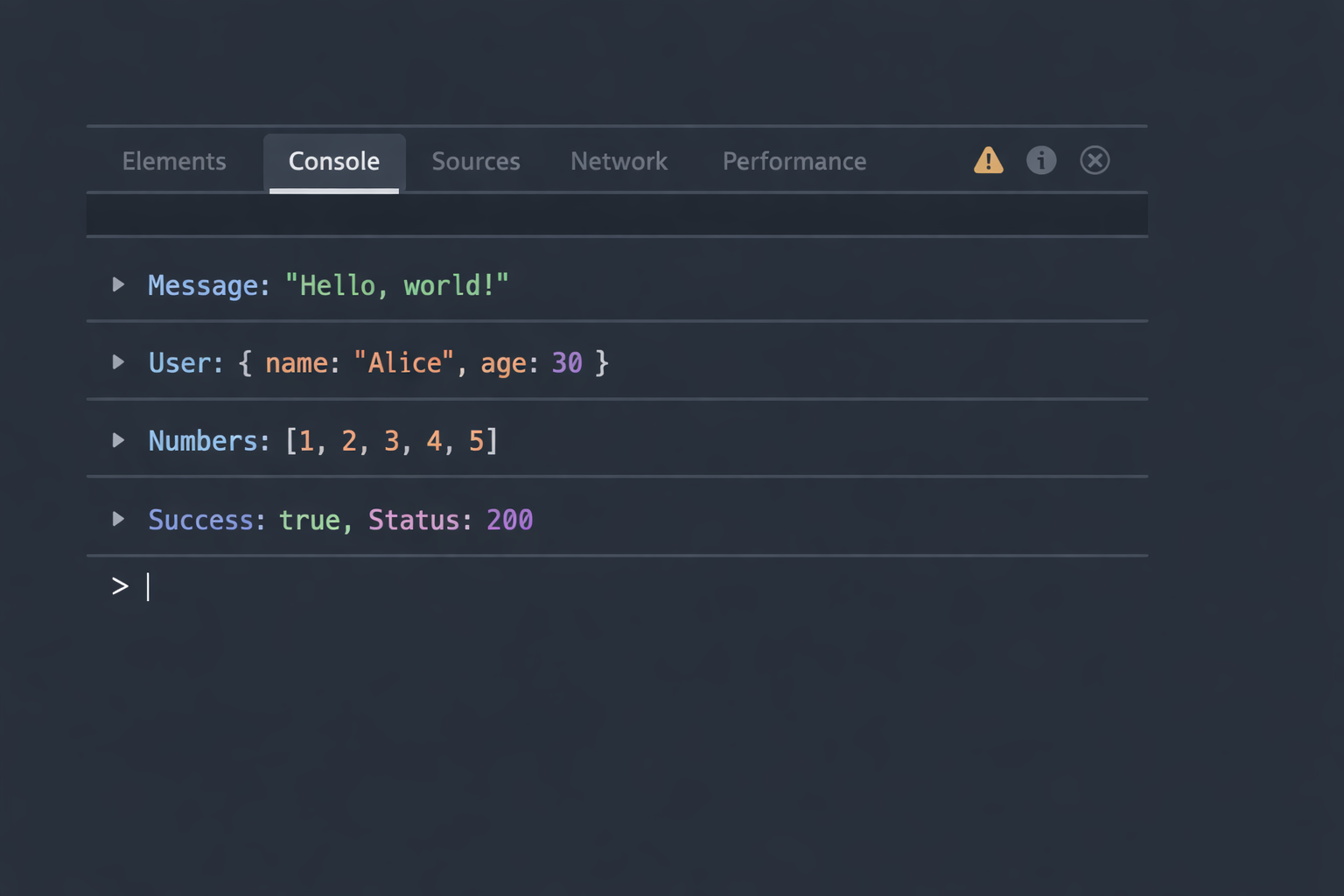
A simple tool, often misunderstood
console.log is probably the most common instruction used to debug in the browser. It is also frequently criticized for being too basic or not “serious” enough.
The issue is not the tool itself. It mostly comes from how it is used. A log added without a clear goal rarely provides useful information.
Logging without a clear goal
In many situations, logs are added in a hurry. Something feels off, so console.log calls appear everywhere just to “see what happens”.
The console quickly fills up with isolated values, without context, and hard to connect together. The amount of information grows, but understanding does not.
A useful log always answers a specific question.
What a well placed log actually provides
A good log does not need to be complex or verbose. Its main role is to confirm or reject a simple hypothesis.
- Does the code really go through this path?
- What is the exact value at this moment?
- Is this call happening more often than expected?
When these questions are clear, reading the console becomes much more effective.
Reducing noise
Adding logs is easy. Keeping them forever is just as easy. Over time, an overloaded console hides useful information.
Removing logs that are no longer needed is part of the job. It is not superficial cleanup, it is about clarity and discipline.
An observation tool, not a magic solution
console.log is not meant to replace understanding the code. It simply helps observe what actually happens at runtime.
Used with intention, it remains a simple, reliable, and sufficient tool in many situations 🙂